
IV rehydration for Bali Belly
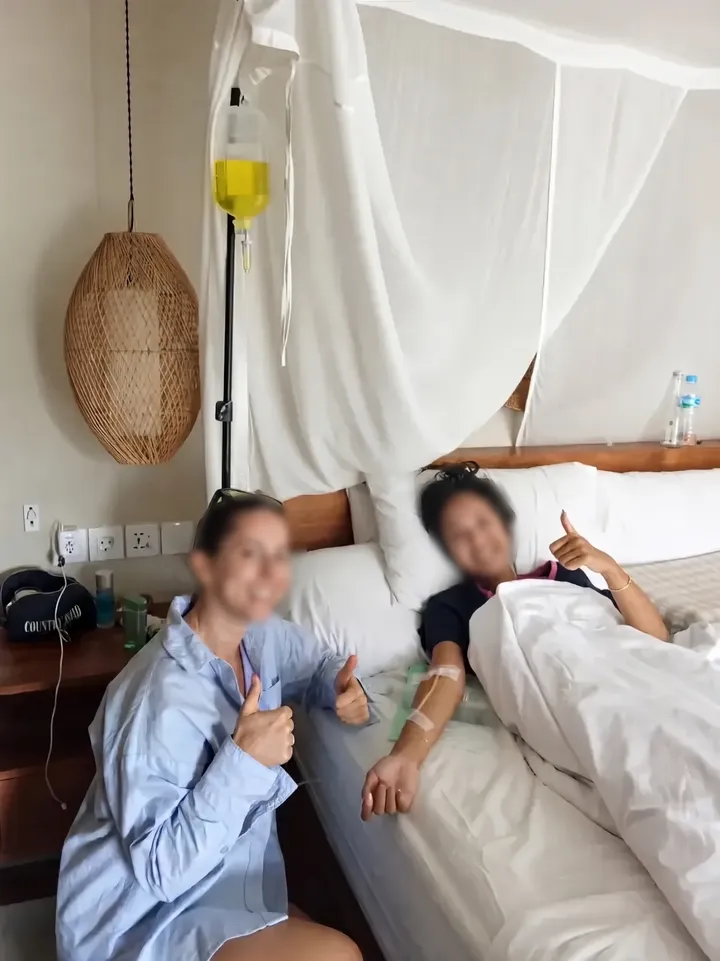
When Bali Belly leaves you dehydrated or unable to keep fluids down, a doctor can give you fluids and electrolytes through a drip in your villa or hotel room.
Oral rehydration comes first
For most people with Bali Belly, drinking oral rehydration salts is enough, and it works as well as a drip for mild to moderate dehydration. The World Health Organization recommends oral rehydration as the first treatment for diarrhoea.
A drip becomes the better option when:
- you are vomiting so often that you cannot keep fluids down;
- the doctor finds moderate dehydration: dizziness on standing, a fast pulse, very little dark urine;
- you are too weak or nauseous to drink the amount you need;
- you have a flight soon and oral fluids are not catching up.
If the doctor finds severe dehydration, very low blood pressure, confusion or signs of another serious problem, the right place is a hospital, not a villa. We will arrange that.
What the treatment involves
- The doctor examines you and explains why a drip is or is not recommended, and what it will cost.
- A registered nurse places a small cannula in a vein in your hand or arm.
- Fluids run in over roughly 45 to 90 minutes while the nurse monitors you.
- The cannula is removed, the site is dressed, and you get written advice on what to drink and eat next.
- We follow up by WhatsApp the next day.
Risks and who should not have a drip at home
IV fluids are generally safe when given by trained staff, but they are not risk-free:
- bruising, pain or swelling where the cannula goes in;
- infection at the site (uncommon with sterile technique);
- fluid overload in people with heart or kidney disease, which is why we ask about your medical history;
- rarely, a reaction to a medicine added to the drip.
We will not give IV fluids at home to people who need hospital monitoring, including those with severe dehydration, signs of sepsis, significant heart failure or kidney failure.
Ask if you need IV fluids or call +62 851 4291 9193
Cost
The drip is charged on top of the home visit fee and only if the doctor decides you need it. You will know the total before treatment starts. See prices.
Questions people ask
How long does the drip take?
Usually 45 to 90 minutes, depending on how much fluid you need. The nurse stays with you for the whole infusion.
Can I ask for a drip without seeing the doctor?
No. IV fluids are a medical treatment. The doctor assesses you first; if oral fluids are enough, we will tell you and you will not pay for a drip you do not need.
What goes into the drip?
Mainly sterile fluid with salts (electrolytes) to replace what you have lost. The doctor may add medicine for nausea or vitamins when clinically indicated. Every product we use is registered with Indonesia's food and drug authority (BPOM).